cellF is the world’s first neural synthesizer, grown in a Petri dish from the creators own cells. This neural network is entirely biological and is connected to digitial sensors which then control the sounds.
Matthias Dorfelt – Block Bills
Matthias took data from bitcoin blockchains and used an ai network to generate ‘banknotes’.
Ross Goodwin – Word Car
For this project a surveillance camera was mounted to a car, with the direction controlled by perlin noise via a computer. The camera took pictures every 20 seconds and then began converting that image into data.
First it is converted to an ASCII art piece shown above, and from there translated into a sentence describing the scene. This is all done by a neural network trained on thousands of books and poetry.
Ghost is a machine intelligence art installation at the Kunsthaus Graz gallery in Graz, Austria created by Tristan Schulze
The neural network observes information directed towards Kunsthaus Graz online, and takes in input from users via an app. It uses this to learn and adapt to get an understanding of the world. It then translates this into sentences (Truisms) describing a truth of a subject and prompts the user to agree.
If a statement is generally agreed with it may present this idea on the facade on the the side of Kunsthaus Graz in the form of lights.
While exploring the drawing exercises for my slides I noticed that childhood drawing games which involved collaboration were quite common. I found it quite interesting that these were considered quite basic and crude, and that it is a technique that isn’t really used outside of primary school in the creative process. This doesn’t make sense as I find that these collaborative techniques often produce a much more unique and creative output than what I might create alone.
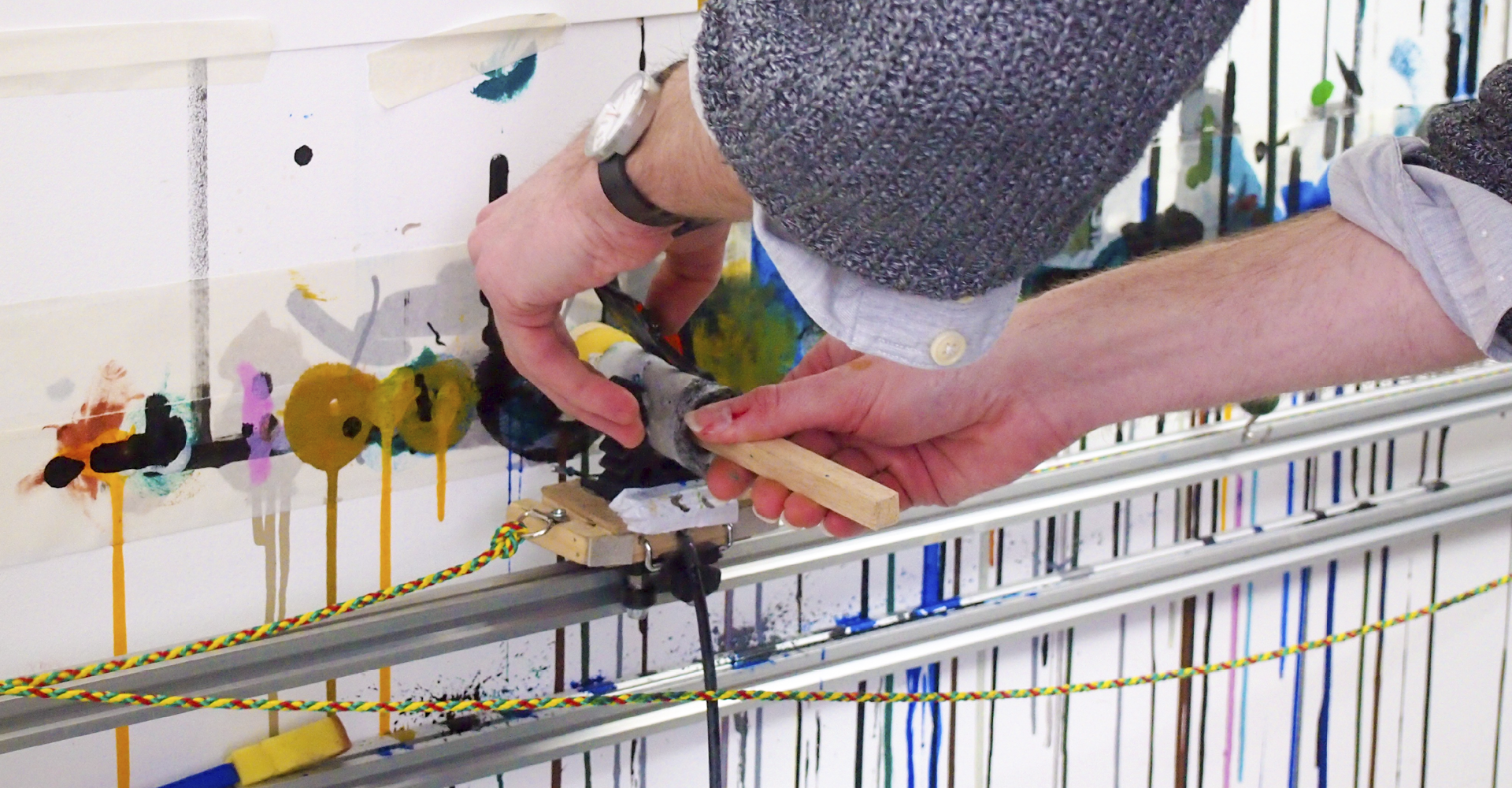
Illustration collective Nous Vous’ created a drawing machine which makes use of collaboration and forces three people to work on the same drawing. It works like a giant etch a sketch and each person controls a different movement by pulling on string.
Following on from the direction I was exploring last week, I was quite intrigued about the possibility of collaboration in illustration and how AI could be collaborated with to create different results.
I came across this recent project by Nvidia called GauGAN – A program which turns basic drawings into photorealistic images.
The program uses a technology of AI called GANs – Generative Adversarial Networks. In short this involves two AI networks competing against each other to create something as close to realism as possible. One tries to create a realistic image, and the other identifies whether the result is real or fake.
The networks learn from each other – one becomes better at identifying fakes, while the other becomes better at creating fakes.
“You can think of this being like a competition between counterfeiters and police,” Ian Goodfellow said. “Counterfeiters want to make fake money and have it look real, and police want to look at any particular bill and determine if it’s fake.” – Jamie Beckett
My slides for presentation in class. I decided to focus on giving some context for what I am passionate about and how I have ended up in the direction that I am headed.
When trying to decide on a project direction I decided the most important thing was for it to be something I am passionate about. I also thought it was important that I explore something I haven’t tried before or want to explore in more depth.
For me my passion lies in Illustration, so I wanted the project to focus around that. I then began thinking about ways I could expand on that or explore something new. One thing I have always been interested in exploring is 3-d/sculpture work, so it could take on a physical form like that.
I then thought about previous coding projects I had done and how passionate I had gotten during them. After talking in class about coding/ai/technology intersecting with the creative world my first year project coding for creative practise came to mind.
This project is a simple example of how we can use computing power to create/enhance the creative process. In this project I created a program which took an input and turned it into a randomly generated map.
No man’s sky
Precedent example on how coding can be used to create – The concept for this game is that every ‘atom’ is procedurally generated using algorithms and parameters.
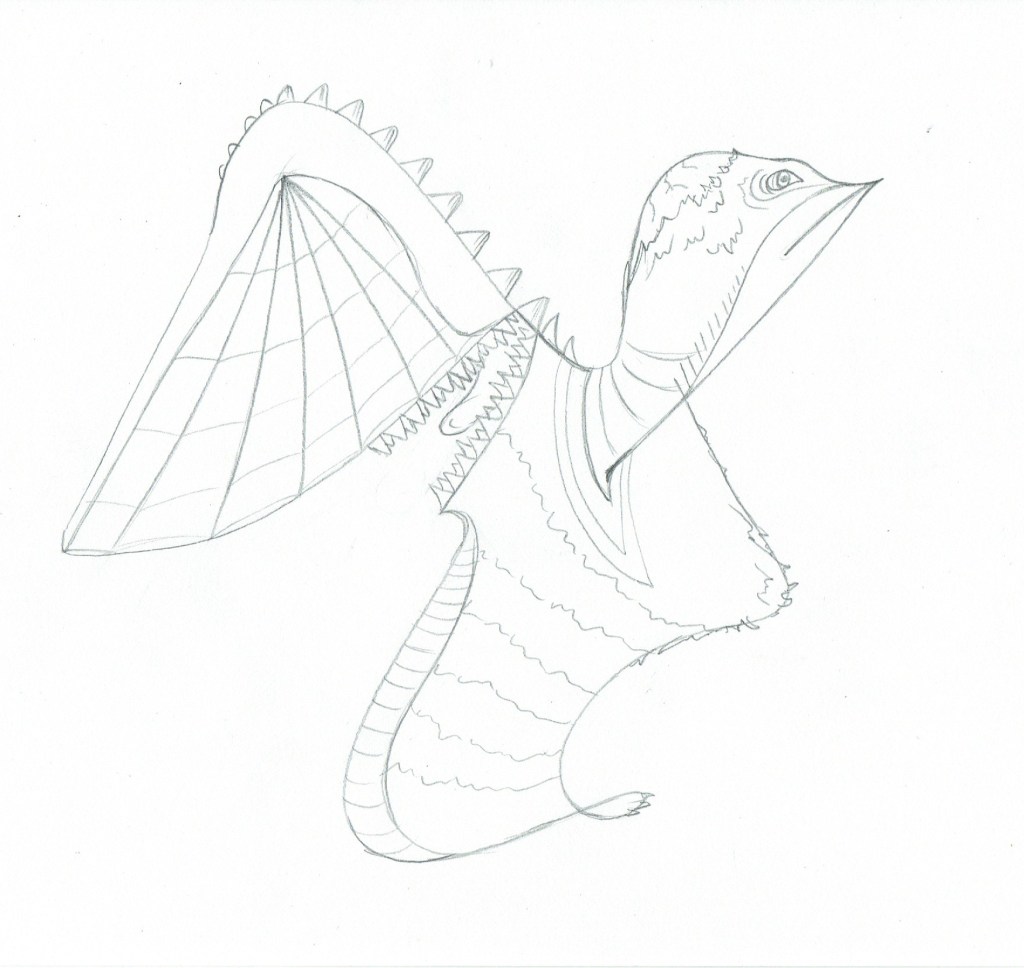
For this image above I took a trip down memory lane looking at a game I used to play in primary school with my friend. We would draw a random line (such as on the left) and then challenge the other person to create some sort of creature out of that. It was a great way to challenge and force creativity and thinking outside of the box.
From this I was reminded of a classic childhood game much like this, which involved folding paper and drawing different sections of a ‘man’ to create something unique with multiple people. I realised that I have an example on my wall which was created during a party a few years ago… clearly it is a technique that most remember and has stuck with us.
I began to wonder how this concept could be explored further through other mediums. This could be implemented through code, using the computer to create the initial random shape. Or the reverse, what sort of creation could come out of it? Or could I combine this with 3-D design / sculpture to create a physical representation?
I also find the idea of collaboration drawing quite interesting and find it intriguing these seemingly simple and meaningless childhood drawing ‘games’ are actually an excellent way to enhance creativity.






 VCD 453 - Jason Fastier